
One of the biggest misconceptions parents have about early literacy is that reading begins only when children start recognising words. In reality, the journey starts much earlier. Long before children read independently, they develop foundational language abilities through stories, songs, conversations, and playful experiences. This is why quality reading activities are such an important part of early childhood education. Through carefully designed experiences, children begin building the reading skills they will need in later years. Activities that support listening, vocabulary, sound awareness, and communication create the foundation for literacy success. Even simple exercises, such as rhymes and phonics, for 3-year-olds contribute significantly to the development of early literacy.
Why Reading Readiness Matters in Early Childhood
Reading readiness is not about teaching toddlers to read entire books. It is about developing the underlying skills that make reading possible later.
Before children become readers, they must first learn how to:
- Listen attentively
- Recognise sounds
- Understand language patterns
- Build vocabulary
- Follow stories
- Communicate ideas
A quality nursery school introduces these skills gradually through age-appropriate learning experiences.
At Mother’s Pet Kindergarten, early literacy development is viewed as part of a broader approach to communication, confidence, creativity, and exploration.
What Is Reading Readiness?
Reading readiness refers to the collection of developmental abilities that prepare children for future literacy.
These include:
- Listening skills
- Oral language development
- Sound awareness
- Vocabulary growth
- Memory
- Concentration
- Visual recognition
Children do not develop these skills through worksheets alone. They learn best through meaningful interaction, exploration, and play.
This is why a nurturing nursery school uses engaging activities to make literacy development enjoyable and natural.
Why Parents Should Focus on Skills Rather Than Early Reading
Many parents worry when they see other children recognising letters or reading simple words earlier.
However, literacy experts consistently emphasise that foundational reading skills matter more than early decoding.
Children who develop strong:
- Listening abilities
- Vocabulary
- Communication confidence
- Sound recognition
often become stronger readers later because they have a deeper understanding of language.
The goal during nursery years should be readiness rather than academic pressure.
1. Storytelling Sessions
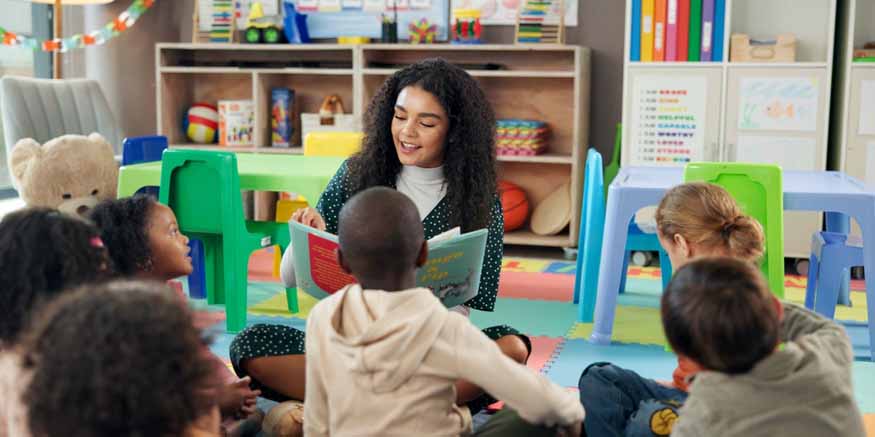
Storytelling is one of the most powerful reading activities for young children.
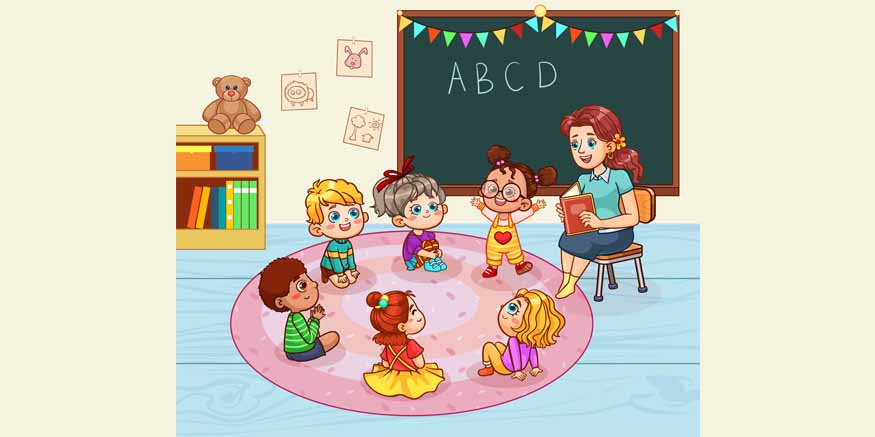
When teachers read stories aloud, children learn:
- Vocabulary
- Sentence patterns
- Listening skills
- Story structure
- Imagination
Storytelling also helps children associate books with enjoyment and curiosity.
At a quality nursery school, story sessions often become a favourite part of the day.
2. Nursery Rhymes and Action Songs
Rhymes introduce children to rhythm, repetition, and sound patterns.
These experiences strengthen:
- Memory
- Listening abilities
- Pronunciation
- Sound awareness
Rhyming activities are especially valuable because they help children begin recognising similarities between sounds.
This forms an important foundation for future reading skills.
3. Picture Book Exploration
Before children can read words, they learn to interpret pictures.
Picture books encourage:
- Observation
- Vocabulary building
- Story prediction
- Visual understanding
Teachers can ask questions such as:
- What do you see?
- What might happen next?
- How does the character feel?
These conversations build language comprehension naturally.
4. Sound Awareness Games
Recognising sounds is an important step in literacy development.
Simple listening games help children identify:
- Environmental sounds
- Animal sounds
- Beginning sounds in words
These playful exercises introduce early sound discrimination skills that support future reading success.
Many phonics activities for 3-year-olds begin with simple sound recognition rather than formal letter instruction.
5. Puppet Storytelling
Children often become more engaged when stories are presented through puppets and dramatic play.
Puppet activities encourage:
- Listening
- Language development
- Imagination
- Participation
Children frequently retell stories themselves, which strengthens communication and memory.
A creative nursery school uses storytelling in multiple formats to keep learning interactive.
6. Vocabulary Building Through Conversations
One of the most effective literacy tools is everyday conversation.
Teachers who engage children in meaningful discussions help expand:
- Vocabulary
- Sentence formation
- Listening comprehension
- Verbal confidence
Children learn language best through interaction rather than memorisation.
This is why communication-rich environments are so valuable during the nursery years.
7. Letter Recognition Through Play
Children can begin becoming familiar with letters through playful activities.
Examples include:
- Alphabet puzzles
- Letter matching games
- Sand tracing
- Magnetic letters
The emphasis should remain on exploration rather than formal instruction.
A quality nursery school introduces letters gradually and in developmentally appropriate ways.
8. Phonics Activities for Sound Recognition
Early phonics for 3-year-olds should focus on helping children connect sounds with spoken language.
Simple activities include:
- Sound matching games
- Listening exercises
- Rhyming challenges
- Beginning sound recognition
The goal is not reading fluency but building awareness of how language sounds.
These activities support future literacy without creating pressure.
9. Dramatic Play and Role-Playing
Pretend play contributes significantly to language development.
Activities such as:
- Pretend shops
- Doctor role-play
- Puppet theatres
- Home corners
encourage children to:
- Use new vocabulary
- Build communication skills
- Express ideas confidently
Strong oral language development directly supports future reading success.
This is why dramatic play remains an important component of a well-rounded nursery school program.
10. Listening and Following Instructions
Listening is one of the most overlooked literacy skills.
Activities that encourage children to:
- follow directions
- complete simple tasks
- participate in group discussions
help strengthen attention and comprehension.
These abilities support future classroom learning and reading development.
Many important reading skills begin with simply learning how to listen carefully and understand spoken language.
How Literacy for Toddlers Develops Naturally
Effective literacy for toddlers does not involve forcing academic instruction.
Instead, literacy grows through:
- Conversations
- Stories
- Songs
- Play
- Exploration
- Social interaction
Children learn best when literacy experiences are enjoyable and emotionally positive.
This approach helps build confidence while encouraging a lifelong interest in reading.
Why Play-Based Learning Supports Reading Readiness
Play-based learning creates opportunities for language-rich experiences.
Children naturally practise:
- Communication
- Listening
- Storytelling
- Vocabulary development
through activities that feel engaging and meaningful.
At Mother’s Pet Kindergarten, literacy development is woven into daily experiences rather than isolated as a separate academic task.
This approach reflects how young children naturally learn and develop.
Supporting Reading Readiness at Home
Parents can reinforce early literacy through simple daily habits.
Helpful strategies include:
Read Aloud Every Day
Even ten minutes of reading together can have a significant impact.
Talk Frequently
Conversations expand vocabulary and communication skills.
Sing Songs and Rhymes
Music strengthens memory and sound awareness.
Encourage Questions
Curiosity supports language development.
Limit Passive Screen Time
Interactive communication contributes more effectively to literacy growth.
These habits help strengthen the skills children are already developing in school.
What Parents Should Avoid
When supporting literacy development, avoid:
- Comparing children
- Forcing reading too early
- Excessive worksheets
- Correcting every mistake
- Creating pressure around learning
Positive experiences build stronger long-term outcomes than early academic stress.
The goal is to nurture curiosity and confidence.
Why Nursery School Plays a Critical Role
A high-quality nursery school provides the environment children need to develop literacy naturally.
Children benefit from:
- Language-rich classrooms
- Skilled educators
- Storytelling opportunities
- Interactive learning
- Social communication experiences
These elements help create a strong foundation for future reading success.
Parents exploring nursery school admissions should look for schools that prioritise holistic literacy development over rote learning.
Why Parents Trust Mother’s Pet Kindergarten
For decades, Mother’s Pet Kindergarten has helped children build a strong foundation in communication and literacy through child-centred learning.
The school’s approach focuses on:
- Language development
- Story-based learning
- Creative expression
- Play-based exploration
- Confidence building
This balanced philosophy ensures that children build essential literacy skills while continuing to enjoy the wonder and joy of childhood.
Families searching for a trusted Nursery School in Nagpur often appreciate the school’s commitment to nurturing both academic readiness and emotional well-being.
Final Thoughts
Strong reading abilities begin long before a child opens their first reader. Through meaningful reading activities, engaging conversations, storytelling, sound awareness games, and age-appropriate phonics for 3-year-olds, children gradually build the reading skills needed for future success. Supporting literacy for toddlers is not about accelerating academic progress but about creating joyful experiences that foster language development and curiosity.
At Mother’s Pet Kindergarten, early literacy is nurtured through creative learning experiences that help children build confidence, communication abilities, and a genuine love for books. Parents exploring nursery school admission opportunities or looking for a trusted Nursery School in Nagpur can discover how the school’s child-centred approach helps young learners build a strong foundation for lifelong reading and learning.







Recent Comments