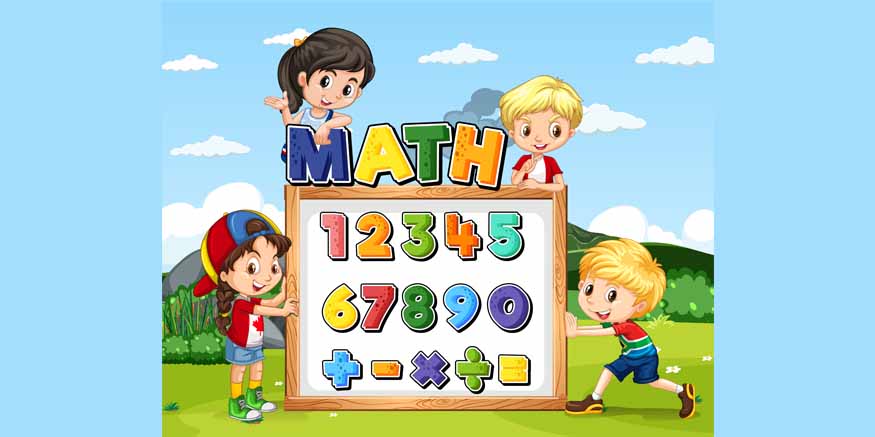
Many parents are surprised to learn that mathematics begins long before children solve equations or complete worksheets. Young children encounter mathematical concepts every day through play, observation, and daily routines. Developing strong number sense during the early years helps children build confidence and curiosity about learning.
Simple kindergarten math activities, playful math games for kids, and hands-on counting activities preschool children enjoy can strengthen early numeracy skills while making learning enjoyable and stress-free.
Why Early Math Skills Matter
Mathematics is about much more than numbers. It develops logical thinking, observation, reasoning, and problem-solving skills.
During the kindergarten years, children begin exploring:
- Counting
- Sorting
- Comparing
- Measuring
- Recognising patterns
- Identifying shapes
A quality kindergarten programme introduces these concepts through play, exploration, and everyday experiences rather than memorisation alone.
How Parents Can Support Math Learning at Home
Parents do not need special teaching materials to build mathematical thinking. Everyday activities naturally introduce early numeracy skills and help children:
- Understand quantity
- Recognise patterns
- Build counting confidence
- Solve simple problems
- Think logically
The key is to make learning interactive, practical, and enjoyable.
1. Count Everyday Objects
One of the easiest counting activities preschool children enjoy is counting familiar household items.
Encourage your child to count:
- Toys
- Books
- Building blocks
- Fruits
- Shoes
This helps children connect numbers with real quantities and strengthens one-to-one correspondence.
2. Sort and Group Objects
Sorting develops observation and classification skills.
Children can group objects by:
- Colour
- Shape
- Size
- Texture
Buttons, toy animals, or blocks make excellent sorting materials while encouraging logical thinking.
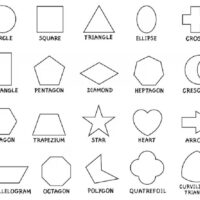
3. Go on a Shape Hunt
Turn shape recognition into a fun game by finding shapes around the house.
Ask children to identify:
- Circles
- Squares
- Rectangles
- Triangles
They will soon discover shapes in clocks, plates, windows, books, and furniture, helping them connect mathematics with everyday life.
4. Build and Compare Towers
Using building blocks or construction toys, ask your child to build towers of different heights.
Discuss questions such as:
- Which tower is taller?
- Which is shorter?
- How many blocks were used?
This activity introduces comparison, measurement, and spatial awareness.
5. Count During Daily Routines
Daily routines offer countless opportunities for mathematical learning.
Encourage children to count while:
- Climbing stairs
- Setting the table
- Putting away toys
- Walking outdoors
These natural experiences reinforce counting without feeling like formal lessons.
6. Create Simple Patterns
Pattern recognition is an important early math skill.
Use:
- Coloured beads
- Blocks
- Stickers
- Household objects
Create simple sequences such as red-blue-red-blue or big-small-big-small and invite your child to continue the pattern.
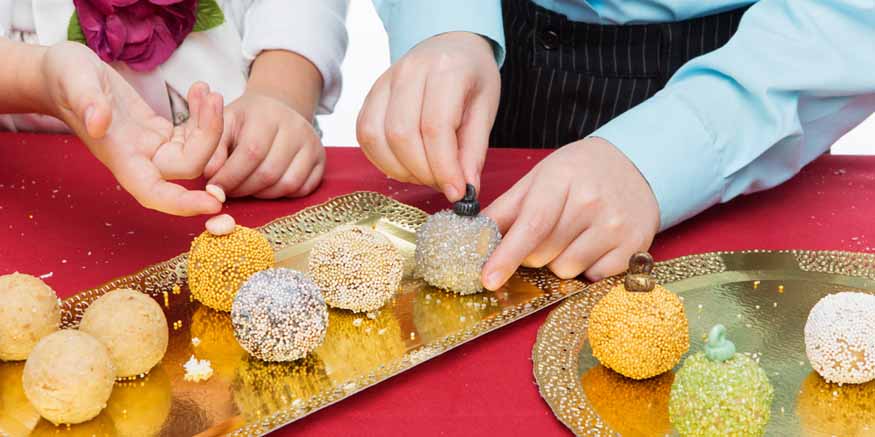
7. Cook Together
Cooking introduces practical mathematical concepts.
Children can help by:
- Counting spoons
- Measuring ingredients
- Comparing quantities
- Identifying full and empty containers
These activities demonstrate how mathematics is used in everyday life.
8. Play Number Board Games
Simple board games make excellent math games for kids.
Games involving dice, counting spaces, or matching numbers help children strengthen number recognition while also developing patience, concentration, and turn-taking skills.
9. Explore Math Outdoors
Nature offers wonderful opportunities for mathematical discovery.
Children can count:
- Leaves
- Flowers
- Stones
- Birds
- Trees
They can also compare sizes, notice patterns, and sort natural objects, making mathematics active and engaging.
10. Turn Shopping into a Math Activity
Shopping introduces children to practical numeracy.
Encourage them to:
- Count fruits and vegetables
- Compare quantities
- Sort groceries
- Recognise numbers on price tags
Pretend shopping games at home can be just as effective in building mathematical confidence.
Common Math Concepts Children Learn in Kindergarten
Kindergarten introduces foundational concepts that prepare children for future learning.
These include:
Number Awareness
- Counting
- Number recognition
- Understanding quantity
Shapes and Space
- Identifying geometric shapes
- Understanding position and direction
- Spatial awareness
Patterns
- Recognising repeating sequences
- Identifying relationships
Measurement
- Comparing length
- Height
- Weight
- Size
These concepts form the building blocks for later mathematics.
Mistakes Indian Parents Should Avoid
When supporting math learning at home, try to avoid:
- Pressuring children to learn quickly
- Relying only on worksheets
- Focusing only on correct answers
- Comparing children with others
- Making learning stressful
Young children develop stronger mathematical understanding when they are encouraged to explore, experiment, and enjoy the process.
How a Kindergarten School Supports Numeracy
A quality kindergarten school develops mathematical understanding through:
- Hands-on activities
- Games
- Story-based learning
- Group activities
- Problem-solving experiences
Teachers introduce concepts gradually, helping children gain confidence while developing a genuine interest in mathematics.
For more ways to build early skills at home, check out our Nursery reading readiness activities.
Why Parents Trust Mother’s Pet Kindergarten
For decades, Mother’s Pet Kindergarten has nurtured young learners through child-centred programmes that promote both academic and holistic development.
The school focuses on:
- Experiential learning
- Creative exploration
- Communication skills
- Confidence building
- Numeracy readiness
- Holistic development
Its balanced approach ensures mathematical concepts are introduced through engaging, age-appropriate experiences. Families seeking best kindergarten in Nagpur appreciate the school’s commitment to building strong foundations for lifelong learning.
Final Thoughts
Mathematics begins with curiosity, exploration, and everyday experiences. Through engaging kindergarten math activities, creative math games for kids, and enjoyable counting activities preschool children love, parents can strengthen early numeracy skills while helping children develop confidence and a positive attitude towards mathematics.
At Mother’s Pet Kindergarten, children explore mathematical concepts through play, discovery, and hands-on learning, making education meaningful and enjoyable. Parents considering Best kindergarten school in Nagpur or kindergarten admission in Nagpur can visit the admissions page to learn how the school prepares children for lifelong learning and success.

Recent Comments