As children progress through preschool, parents often wonder what comes next. One of the most common questions is the difference between LKG and UKG and how each stage contributes to a child’s development. Understanding the kindergarten levels in India’s education system can help parents set realistic expectations and support their child’s learning journey.
While Lower Kindergarten builds essential foundational skills, Upper Kindergarten prepares children for primary school. Knowing what to expect from the LKG curriculum and how to approach UKG preparation allows families to guide children with confidence during these important years.
Understanding the Kindergarten Journey
Most preschool systems in India generally follow this sequence:
- Playgroup or Pre-Nursery
- Nursery
- Lower Kindergarten (LKG)
- Upper Kindergarten (UKG)
Each stage supports a child’s emotional, social, cognitive, physical, and language development through age-appropriate experiences. At Mother’s Pet Kindergarten, learning progresses gradually, helping children gain confidence while developing essential life and academic skills.
What Is LKG?
Lower Kindergarten (LKG) usually follows Nursery and introduces children to more structured learning while retaining a strong play-based approach. Most children begin LKG around four years of age.
The LKG curriculum focuses on developing:
- Language and vocabulary
- Listening skills
- Number awareness
- Fine motor development
- Social confidence
- Classroom participation
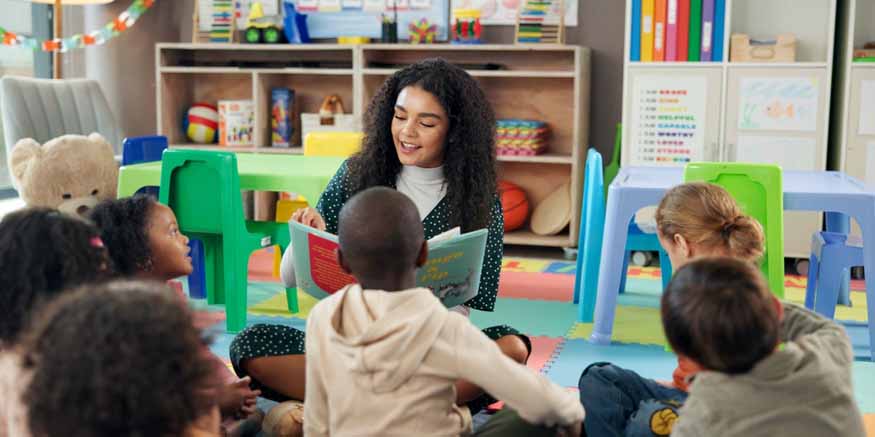
Stories, songs, games, art, and hands-on activities make learning enjoyable while helping children build routines and independence.
What Is UKG?
Upper Kindergarten (UKG) is the final preschool stage before primary school. Children entering UKG are generally around five years old and have already developed many foundational skills.
UKG focuses on strengthening:
- Early literacy
- Reading and writing readiness
- Numeracy
- Logical thinking
- Communication
- Problem-solving
- Independent learning
The goal is to prepare children for formal schooling without losing the joy of learning.
LKG UKG Difference: The Core Distinction
The main difference between LKG and UKG lies in their developmental focus.
LKG focuses on building foundations. Children learn classroom routines, communication, confidence, and basic concepts through guided exploration.
UKG focuses on school readiness. Children apply these foundations by strengthening literacy, numeracy, concentration, and independent learning skills.
Simply put, LKG introduces concepts, while UKG helps children use them with greater confidence.
Understanding the LKG Curriculum
The LKG curriculum balances learning with play and supports overall development.
Language Development
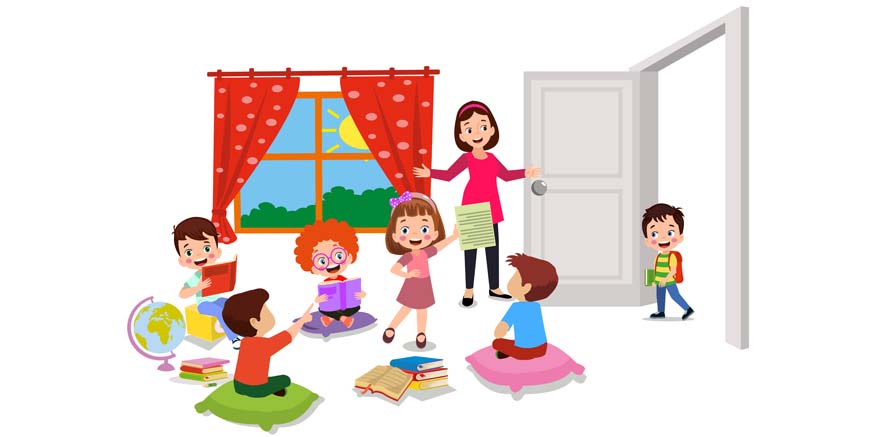
Children build vocabulary, recognise letters, improve listening skills, understand stories, and communicate more confidently.
Numeracy
Activities introduce numbers, counting, shapes, patterns, and simple comparisons.
Motor Skills
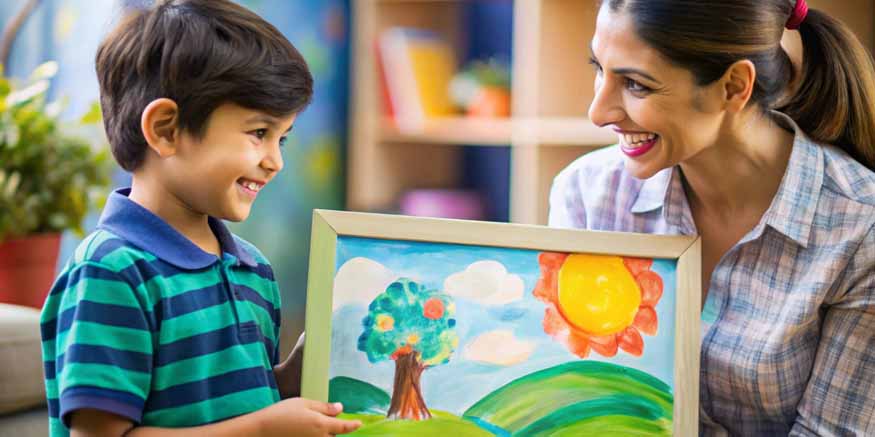
Drawing, colouring, tracing, cutting, and craft activities strengthen pencil control and hand-eye coordination.
Social and Emotional Growth
Children learn sharing, cooperation, independence, and confidence while interacting with classmates.
The emphasis remains on development rather than academic pressure.
What Children Learn During UKG
UKG expands on the skills introduced in earlier years.
Children strengthen:
- Letter-sound recognition
- Word awareness
- Vocabulary
- Number concepts
- Counting and simple operations
- Memory
- Observation
- Logical thinking
- Problem-solving
They also learn to follow instructions, complete tasks independently, and participate confidently in classroom activities, making the transition to primary school smoother.
Supporting UKG Preparation at Home
Good UKG preparation does not require intensive coaching. Everyday experiences play an important role.
Parents can support children by:
- Reading storybooks together
- Encouraging regular conversations
- Following simple daily routines
- Providing opportunities for drawing, puzzles, and creative play
- Encouraging curiosity by answering questions and exploring new ideas
These simple activities strengthen communication, confidence, and a positive attitude towards learning.
Social and Emotional Development
Kindergarten is about much more than academics.
In LKG, children learn to make friends, share, and participate in groups. At UKG, they develop teamwork, cooperation, leadership, and conflict-resolution skills.
During these years, children also become better at expressing emotions, managing disappointment, building resilience, and understanding others’ feelings. These abilities support classroom participation and long-term success.
Choosing the Right Kindergarten School
Whether enrolling in LKG or UKG, parents should look for a kindergarten school that offers:
- Child-centred learning
- Experienced teachers
- Safe, nurturing classrooms
- Play-based learning
- Balanced academic and holistic development
- Strong communication with families
The right environment helps children grow with confidence and curiosity.
If you’re still deciding between stages, our guide on Nursery vs LKG can help you map out the full journey.
Why Parents Trust Mother’s Pet Kindergarten
For decades, Mother’s Pet Kindergarten has guided children through the kindergarten levels India follows with a balanced approach to learning.
The school nurtures:
- Communication skills
- Creativity
- Emotional well-being
- Social development
- School readiness
- Confidence
Its thoughtfully designed programmes respect each child’s developmental pace while fostering curiosity and a lifelong love for learning. Families seeking kindergarten admission in Nagpur value the school’s child-focused approach and long-standing reputation.
Final Thoughts
Understanding the difference between LKG and UKG helps parents appreciate the purpose of each stage. The LKG curriculum builds strong foundations in communication, confidence, and social skills, while UKG preparation strengthens literacy, numeracy, independence, and school readiness. Together, the kindergarten levels India follows prepare children for a successful transition to primary school.
At Mother’s Pet Kindergarten, every stage is designed to make learning joyful, meaningful, and developmentally appropriate. Parents exploring best kindergarten in Nagpur can discover how the school helps every child build a confident foundation for lifelong learning.





Recent Comments