As children reach the final stage of preschool, many parents begin wondering what lies ahead. Upper Kindergarten (UKG) is an important year because it bridges early childhood learning and formal primary education. Understanding the UKG syllabus helps parents support their child’s development with confidence and realistic expectations.
A well-designed kindergarten curriculum strengthens literacy, numeracy, communication, creativity, and independence while keeping learning engaging and age-appropriate. By understanding the key UKG subjects, parents can gain a clear picture of how this stage prepares children for Grade 1.
Why UKG Is an Important Stage
UKG is usually the final preschool year before children enter primary school. By this stage, children have already built foundational skills through Playgroup, Nursery, and LKG. UKG strengthens these skills while encouraging greater independence and confidence.
The UKG syllabus focuses on developing:
- Communication skills
- Literacy readiness
- Numeracy
- Problem-solving
- Social confidence
- Emotional maturity
- Independence
A quality kindergarten programme prepares children not only for academics but also for the routines and responsibilities of school life.
Goals of the UKG Year
While literacy and numeracy become more structured, UKG is about much more than academics.
The kindergarten curriculum helps children:
- Follow instructions independently
- Participate confidently in group activities
- Improve concentration
- Strengthen communication
- Build positive learning habits
- Develop a love for learning
These skills make the transition to Grade 1 smoother and more enjoyable.
What Does the UKG Syllabus Include?
A comprehensive UKG syllabus supports development across several key areas:
- Language and literacy
- Writing readiness
- Numeracy
- Environmental awareness
- Creative expression
- Physical development
- Social and emotional learning
- School readiness
Together, these areas help children become confident and well-rounded learners.
Language and Literacy Development
Language remains one of the most important UKG subjects.
Children continue developing:
- Letter recognition
- Letter-sound relationships
- Vocabulary
- Simple word formation
- Listening comprehension
- Story understanding
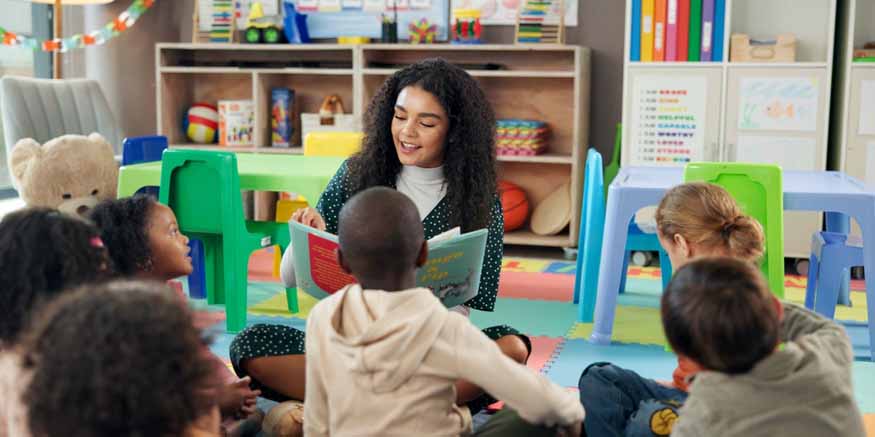
Teachers use storytelling, rhymes, songs, picture discussions, and interactive conversations to make learning enjoyable while building communication skills and confidence.
Writing Readiness
UKG prepares children for formal writing through activities that strengthen fine motor skills.
Children practise:
- Pencil grip
- Tracing patterns
- Letter formation
- Writing their names
- Simple writing exercises
The focus is on coordination and confidence rather than perfect handwriting.
Numeracy and Mathematical Thinking
Mathematics is introduced through practical, hands-on experiences.
Children learn:
- Number recognition
- Counting
- Number sequencing
- Shapes
- Patterns
- Comparisons
- Basic measurement concepts
Games, visual aids, and classroom activities help children develop logical thinking and confidence with numbers.
Environmental Awareness
The UKG curriculum encourages children to understand the world around them through familiar topics such as:
- Family
- Community helpers
- Animals
- Plants
- Nature
- Seasons
- Festivals
- Everyday surroundings
These experiences build observation skills, curiosity, and meaningful connections between classroom learning and daily life.
Creativity and Self-Expression
Creative learning continues to play an important role throughout UKG.
Activities include:
- Drawing
- Painting
- Craft work
- Music
- Dance
- Dramatic play
- Story creation
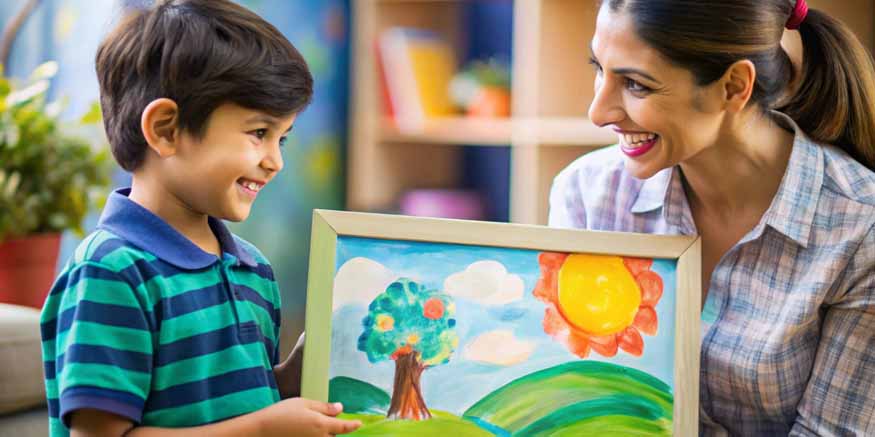
These experiences strengthen imagination, confidence, self-expression, and fine motor development while making learning enjoyable.
Physical, Social and Emotional Development
Physical activity supports healthy growth and classroom readiness.
Children participate in activities that improve:
- Running and jumping
- Balance and coordination
- Cutting and colouring
- Writing preparation
- Hand-eye coordination
Alongside physical development, children also learn to:
- Share and cooperate
- Build friendships
- Communicate respectfully
- Express emotions appropriately
- Follow classroom routines
These life skills are essential for success in primary school.
Building Independence
One of the key goals of UKG is helping children become independent learners.
Children gradually learn to:
- Organise their belongings
- Follow daily routines
- Complete simple tasks independently
- Make responsible choices
- Participate confidently in classroom activities
These experiences prepare them for the greater responsibility expected in Grade 1.
Expected Learning Outcomes
Every child develops at their own pace, but by the end of UKG, many children are able to:
- Recognise letters and their sounds
- Understand simple stories
- Count and recognise numbers confidently
- Identify shapes and patterns
- Follow classroom instructions
- Participate actively in group learning
- Complete age-appropriate tasks independently
- Communicate ideas with greater confidence
These learning outcomes reflect holistic development rather than academic achievement alone.
How Parents Can Support UKG Learning at Home
Parents can reinforce classroom learning through simple daily activities.
Helpful ways to support children include:
- Reading storybooks together every day
- Encouraging conversations and questions
- Practising counting during everyday activities
- Providing opportunities for drawing and creative play
- Maintaining consistent routines that encourage responsibility and independence
These experiences complement the kindergarten curriculum while keeping learning enjoyable.
To see how this connects to what comes next, read our guide on transitioning smoothly from Kindergarten to Grade 1.
Why Parents Trust Mother’s Pet Kindergarten
For decades, Mother’s Pet Kindergarten has helped children build strong foundations for lifelong learning through a child-centred approach.
The school focuses on:
- Communication development
- Creativity
- Emotional well-being
- Confidence building
- Social development
- School readiness
Its thoughtfully designed programmes combine structured learning with play and exploration, helping every child develop at their own pace. Families seeking kindergarten admission in Nagpur appreciate the school’s nurturing environment and holistic approach to early education.
Final Thoughts
A thoughtfully designed UKG syllabus prepares children for the transition to primary school by developing literacy, numeracy, communication, creativity, independence, and social skills. A balanced kindergarten curriculum ensures children become confident learners while continuing to enjoy the process of discovery.
At Mother’s Pet Kindergarten, every learning experience is designed to nurture curiosity, confidence, and school readiness. Parents exploring kindergarten in Nagpur can visit the admissions page to learn how the school supports children during this important stage of growth.

Recent Comments