
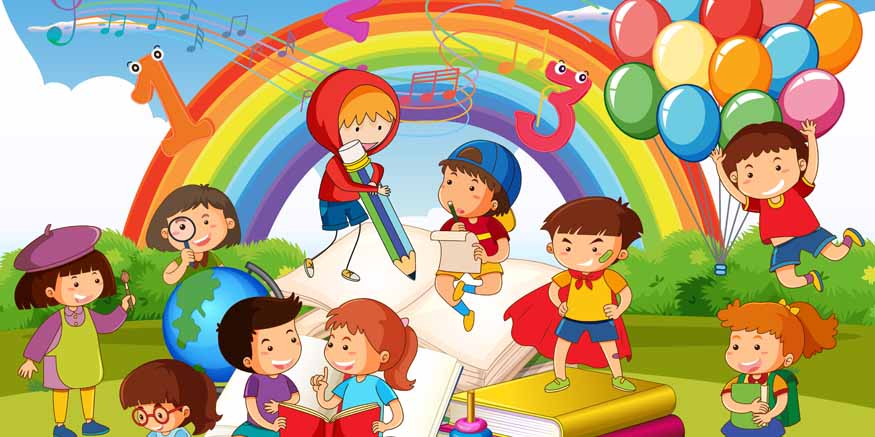
I remember watching my sister worry endlessly about whether her toddler son was learning enough at home. Like many Indian parents, she believed learning only happened through books and structured teaching. But everything changed when she started introducing simple yet intentional brain development activities into his daily routine. From stacking blocks to singing rhymes together, she noticed how quickly he responded to interactive play. These small moments became powerful forms of early stimulation that improved his attention span, curiosity, and confidence. Through playful experiences and engaging toddler learning games, she also began noticing stronger communication and better cognitive skills that toddlers naturally develop during the early years.
Why Brain Development Matters During the Early Years
The first five years of a child’s life are extremely important for brain growth. During this period, children absorb information rapidly through observation, interaction, movement, and sensory experiences.
Experts in child psychology often describe early childhood as a time when the brain forms millions of neural connections every second. This is why meaningful brain development activities during toddlerhood can have a lasting impact on learning, emotional intelligence, memory, and creativity.
A nurturing kids’ play school understands the importance of balancing structured learning with playful exploration. Through carefully designed playgroup activities, children strengthen both cognitive and emotional development in joyful ways.
For Indian parents, this understanding is especially important today as modern childhood becomes increasingly screen-focused and sedentary.
How Playgroup Activities Help Cognitive Growth
Children do not learn best by sitting still for long periods. They learn by touching, moving, listening, experimenting, observing, and asking questions.
Interactive playgroup activities encourage:
- Problem-solving
- Language development
- Social interaction
- Memory building
- Sensory processing
- Emotional confidence
A quality kids’ play school creates opportunities for children to learn naturally through engaging routines and hands-on experiences.
Let us now explore ten highly effective activities that support healthy brain development in toddlers.
1. Building Blocks and Stacking Games
One of the simplest yet most powerful brain development activities for toddlers is block play.
When children stack blocks, they learn:
- Hand-eye coordination
- Spatial awareness
- Balance and structure
- Cause and effect
- Patience and concentration
These activities also strengthen fine motor control and logical thinking.
Many educators use blocks regularly in playgroup activities because they encourage independent thinking and creativity.
2. Music and Rhymes for Language Growth
Toddlers naturally respond to rhythm, sound, and repetition. Singing rhymes and action songs improves memory and listening skills while introducing vocabulary in an enjoyable way.
Music-based toddler learning games also encourage movement and participation. Children begin understanding patterns, sequencing, and communication through repetition.
In Indian classrooms, traditional rhymes combined with global nursery songs create a culturally rich learning environment that beautifully supports language development.
3. Sensory Play for Early Stimulation
Sensory play is one of the most valuable forms of early stimulation for young children.
Activities involving:
- Sand
- Water
- Clay
- Rice bins
- Textured materials
- Finger painting
help toddlers explore the world through touch and movement.
Sensory experiences strengthen neural pathways connected to memory, attention, and emotional regulation.
Many modern kids’ play school environments include sensory corners because they encourage curiosity, creativity, and self-expression.
4. Storytelling and Picture Reading
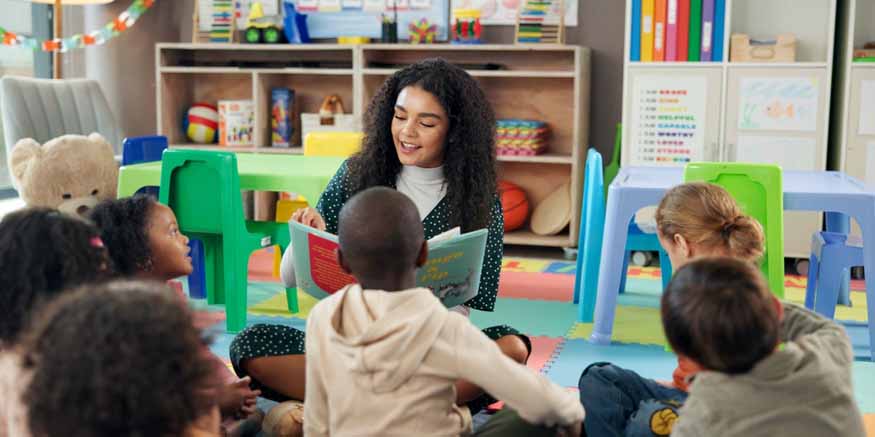
Reading stories aloud is one of the best ways to improve communication and imagination.
Through storytelling, children develop:
- Listening skills
- Vocabulary
- Emotional understanding
- Sequencing abilities
- Visual imagination
Interactive storytelling sessions are among the most effective playgroup activities for improving concentration and language confidence.
Indian parents can also include regional stories and folk tales to help children connect with culture while learning.
5. Puzzle Games That Build Problem-Solving Skills
Simple puzzles encourage children to think critically and make connections.
These toddler learning games improve:
- Logical thinking
- Shape recognition
- Memory
- Patience
- Decision-making
Completing a puzzle gives toddlers a sense of accomplishment that boosts self-confidence.
Teachers in a quality kids’ play school often introduce age-appropriate puzzles gradually to support healthy cognitive growth.
6. Pretend Play and Role-Playing Activities
Pretend play may look simple, but it plays a major role in brain development.
When children pretend to cook, shop, teach, or care for dolls, they begin understanding emotions, relationships, and social situations.
Role-play activities improve:
- Creativity
- Communication
- Emotional intelligence
- Social awareness
- Imagination
These experiences are especially important during early childhood because they help children process real-world situations safely.
Many engaging playgroup activities involve pretend kitchens, doctor sets, puppet corners, and dress-up games.
7. Outdoor Play for Physical and Brain Development
Physical movement directly supports brain function in young children.
Running, climbing, balancing, and jumping improve:
- Coordination
- Focus
- Balance
- Reflexes
- Spatial awareness
Outdoor environments also reduce stress and improve emotional well-being.
A balanced kids’ play school understands that active movement is just as important as classroom learning.
In India, where apartment living and screen exposure are becoming more common, outdoor play has become even more essential for healthy childhood development.
8. Art and Craft Activities That Encourage Creativity
Creative activities stimulate multiple areas of the brain simultaneously.
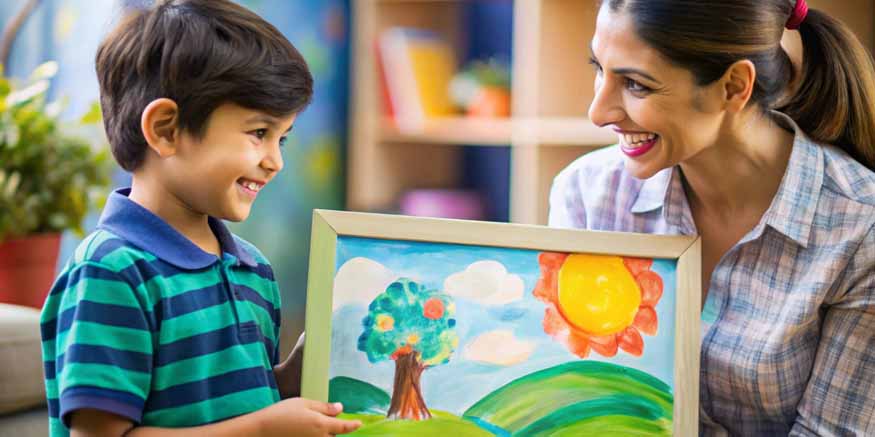
Drawing, colouring, paper tearing, clay modelling, and painting improve:
- Fine motor skills
- Hand strength
- Concentration
- Creative thinking
- Emotional expression
These types of brain-development activities allow children to explore ideas freely, without fear of making mistakes.
Art-based playgroup activities also help children develop confidence in expressing themselves independently.
9. Memory Games for Cognitive Skills
Simple memory activities can significantly strengthen the cognitive skills toddlers need for future learning.
Matching cards, object recall games, and sequencing activities improve:
- Attention span
- Recall ability
- Pattern recognition
- Focus
These toddler learning games are enjoyable while quietly strengthening important cognitive functions.
Teachers often combine memory games with music, movement, and storytelling to make learning more interactive and enjoyable.
10. Group Activities That Build Social Intelligence
Social interaction is one of the most important parts of healthy development.
Group-based playgroup activities teach children:
- Cooperation
- Sharing
- Listening
- Empathy
- Communication
Circle time discussions, group games, and collaborative activities help children build confidence as they interact with peers.
A nurturing kids’ play school creates positive social experiences that support emotional security and independence.
Why Early Stimulation Matters More Than Parents Realise
Many parents assume formal academics are the most important aspect of learning. However, research consistently shows that early stimulation during the toddler years has a major impact on future development.
Children who experience engaging activities early often show stronger:
- Communication skills
- Creativity
- Confidence
- Emotional resilience
- Curiosity
- Problem-solving abilities
This is why high-quality playgroup activities focus on exploration rather than pressure.
The goal is not to create academic stress at an early age. Instead, it is about building a joyful relationship with learning.
How Indian Parents Can Support Brain Development at Home
Parents do not need expensive toys or complicated learning systems to encourage healthy development.
Simple daily experiences can become powerful learning opportunities:
- Talking during meals
- Singing songs together
- Reading bedtime stories
- Playing outdoor games
- Sorting household objects
- Encouraging pretend play
These activities strengthen bonding while improving cognitive skills toddlers naturally develop during the early years.
Consistency and emotional connection matter far more than perfection.
Choosing the Right Kids’ Play School in Nagpur
When searching for a trusted pre-nursery school in Nagpur, parents should look for schools that focus on holistic development rather than only academics.
Before completing Play School Admission, consider whether the school offers:
- Interactive learning spaces
- Safe classrooms
- Creative playgroup activities
- Experienced teachers
- Sensory exploration
- Outdoor play opportunities
- Child-centred teaching methods
A nurturing environment helps children develop confidence, curiosity, and emotional security from an early age.
Why Play-Based Learning Is Globally Recommended
Across the world, child development experts strongly recommend play-based education during the early years.
Play encourages children to:
- Explore independently
- Think creatively
- Solve problems
- Build social skills
- Strengthen emotional intelligence
A quality kids’ play school understands that meaningful learning happens best when children feel safe, curious, and emotionally supported.
This approach benefits children not only academically but also socially and emotionally throughout life.
Final Thoughts
The early years are filled with incredible opportunities for growth and discovery. Through engaging brain development activities, meaningful early stimulation, and joyful playgroup activities, toddlers develop the confidence and curiosity needed for lifelong learning.
At Mother’s Pet Kindergarten, children are encouraged to explore, create, and grow in a nurturing environment that supports healthy development through interactive learning experiences. Parents looking for a trusted preschool in Nagpur or exploring Play school Admission options can visit the admissions page to learn more about giving their child a joyful start at a caring kids play school.








Recent Comments