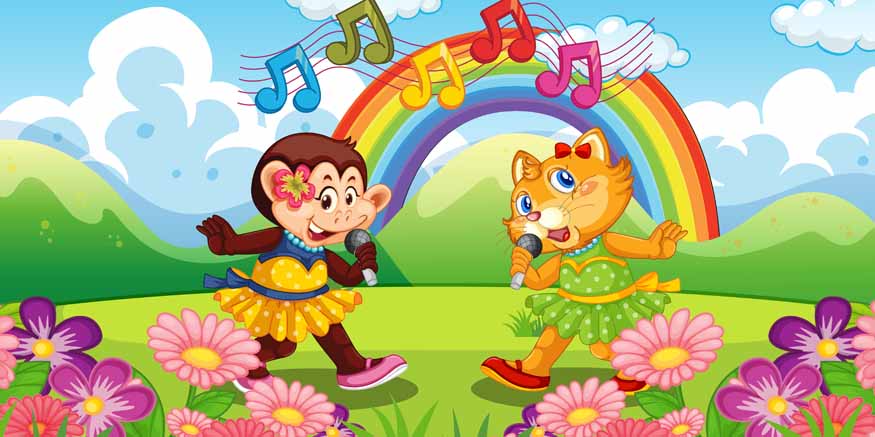
Ask any parent to recall a favourite childhood song, and chances are a nursery rhyme comes instantly to mind. From “Twinkle, Twinkle, Little Star” to “Humpty Dumpty,” these timeless tunes have entertained generations of children across the world. But what many parents may not realise is that nursery rhymes are far more than simple songs. They are powerful learning tools that support language, memory, communication, movement, and social development. Through engaging rhymes for toddlers, carefully chosen language-development rhymes, and interactive early-literacy songs, young children build important skills that support future learning in surprising ways.
Why Nursery Rhymes Have Remained Popular for Generations
Long before educational apps and digital learning tools existed, parents and teachers used nursery rhymes to teach children language, rhythm, and communication.
The reason they continue to be used today is simple. Young children learn naturally through repetition, music, movement, and storytelling.
Rhymes help children:
- Recognise sound patterns
- Improve listening skills
- Expand vocabulary
- Strengthen memory
- Build confidence
A quality nursery school often includes music and rhyme sessions because they create joyful learning experiences while supporting multiple areas of development.
The Hidden Science Behind Nursery Rhymes
When children sing rhymes, several areas of the brain work together simultaneously.
They listen to sounds, remember sequences, anticipate patterns, repeat words, and often combine movement with music.
This combination supports:
- Language development
- Auditory processing
- Memory retention
- Cognitive flexibility
- Social interaction
Many experts consider early literacy songs an important stepping stone towards future reading readiness because they help children become familiar with the sounds and structure of language.
1. Twinkle, Twinkle, Little Star
One of the most recognised nursery rhymes worldwide, this simple song offers several developmental benefits.
Hidden Benefits
- Introduces rhythm and repetition
- Strengthens memory
- Encourages vocabulary development
- Supports listening skills
The repetitive structure helps children predict language patterns, which is an important foundation for literacy development.
2. Humpty Dumpty
Although short and simple, Humpty Dumpty offers more learning opportunities than many parents realise.
Hidden Benefits
- Supports sequencing skills
- Encourages storytelling
- Develops comprehension
- Improves recall ability
Teachers often use this rhyme to encourage children to discuss what happened before, during, and after the story.
These conversations strengthen communication and critical thinking.
3. Jack and Jill
This classic rhyme introduces children to narrative structure and cause-and-effect relationships.
Hidden Benefits
- Builds listening comprehension
- Strengthens memory
- Supports language development
- Encourages discussion
Children begin to understand that actions have consequences, an important cognitive milestone in early childhood.
4. Wheels on the Bus
Few rhymes for toddlers are as engaging as this action-based favourite.
Hidden Benefits
- Improves coordination
- Encourages participation
- Builds vocabulary
- Supports social interaction
The actions associated with the rhyme help children connect language with movement, making learning more memorable.
At a quality nursery school, action rhymes often become opportunities for both language and physical development.
5. Old MacDonald Had a Farm
Animal-based songs are especially appealing to young children.
Hidden Benefits
- Introduces animal sounds
- Strengthens auditory discrimination
- Encourages memory development
- Expands vocabulary
Songs like this also help children practise recognising and reproducing different sounds, an important early literacy skill.
6. Row, Row, Row Your Boat
Simple repetition and rhythm make this one of the most effective early literacy songs for young learners.
Hidden Benefits
- Improves listening skills
- Supports rhythm recognition
- Encourages cooperative participation
- Develops language confidence
Group singing experiences also strengthen social bonding and communication skills.
7. Five Little Ducks
Counting rhymes combine language development with early mathematical awareness.
Hidden Benefits
- Supports number recognition
- Strengthens memory
- Develops sequencing skills
- Encourages prediction
Children often learn mathematical concepts more naturally when they are introduced through music and storytelling.
8. Hickory Dickory Dock
This playful rhyme introduces rhythm, timing, and sound awareness.
Hidden Benefits
- Develops phonological awareness
- Improves listening skills
- Strengthens vocabulary
- Encourages language pattern recognition
Many literacy experts consider rhyming songs particularly valuable because they help children notice similarities between sounds.
Why Language Development Rhymes Matter So Much
Strong communication skills begin long before children learn to read.
Language development rhymes help children:
- Hear sound patterns
- Learn new vocabulary
- Improve pronunciation
- Build sentence awareness
- Develop listening comprehension
Young children absorb language most effectively through repeated exposure and enjoyable interaction.
This is why rhymes remain such a powerful educational tool during the preschool years.
How Nursery Rhymes Support Reading Readiness
Parents often associate reading readiness with recognising letters and words.
However, before children become readers, they need to develop:
- Listening skills
- Sound awareness
- Vocabulary
- Memory
- Language comprehension
Many early literacy songs support these abilities naturally through repetition and rhythm.
Children who regularly engage with songs and rhymes often develop stronger phonological awareness, which plays an important role in future reading success.
Supporting Social and Emotional Development
The benefits of nursery rhymes extend beyond literacy.
Group singing experiences help children:
- Build confidence
- Participate socially
- Express emotions
- Follow instructions
- Enjoy shared experiences
For shy children, music often provides a comfortable way to participate without pressure.
This is one reason many educators include rhymes as part of daily routines in a nursery school setting.
Why Movement Matters During Rhymes
Many popular rhymes for toddlers include actions and gestures.
Movement-based songs help develop:
- Coordination
- Balance
- Motor skills
- Body awareness
Children learn best when multiple senses are involved.
Combining music, language, and movement creates richer learning experiences that strengthen memory and engagement.
How Indian Parents Can Use Rhymes at Home
Supporting learning through rhymes does not require special equipment or extensive preparation.
Simple ideas include:
Sing During Daily Routines
Songs can be incorporated into:
- Mealtimes
- Bath time
- Travel
- Bedtime
Encourage Actions
Add gestures and movements to make songs interactive.
Repeat Favourite Rhymes
Repetition strengthens learning and confidence.
Read Rhyming Books
Books with rhythmic patterns reinforce many of the same skills as songs.
These small experiences can significantly support language development at home.
Why Nursery Schools Continue to Prioritise Rhymes
Despite advances in educational technology, rhymes remain an essential part of early childhood education.
A quality nursery school uses rhymes because they support:
- Language development
- Social interaction
- Confidence building
- Memory
- Listening skills
- Creativity
At Mother’s Pet Kindergarten, music, storytelling, and interactive learning experiences are integrated into everyday routines to help children learn naturally and joyfully.
Choosing a Nursery School That Supports Holistic Development
When exploring nursery school admission, parents should look for schools that balance academics with creative and developmental learning experiences.
Important considerations include:
- Child-centred teaching
- Music and movement activities
- Language-rich classrooms
- Creative expression opportunities
- Social learning experiences
These elements contribute significantly to a child’s overall growth and readiness for future learning.
Families searching for a trusted Nursery School in Nagpur often appreciate environments where learning remains engaging, interactive, and developmentally appropriate.
Final Thoughts
The simple songs many of us remember from childhood carry powerful developmental benefits. Through engaging nursery rhymes, interactive rhymes for toddlers, carefully selected language-development rhymes, and meaningful early-literacy songs, children strengthen communication, memory, listening, social, and literacy skills in ways that feel natural and enjoyable.
At Mother’s Pet Kindergarten, these joyful learning experiences are woven into everyday classroom life because the school believes that children learn best when they are engaged, curious, and happy. Parents considering nursery school admission or looking for a trusted Nursery School in Nagpur can explore the admissions section to discover how the school combines creativity, communication, and child-centred learning to build strong foundations for the future.







Recent Comments